

Originals
Rendezvous in Rome
Oil on canvas
40 x 30 in.
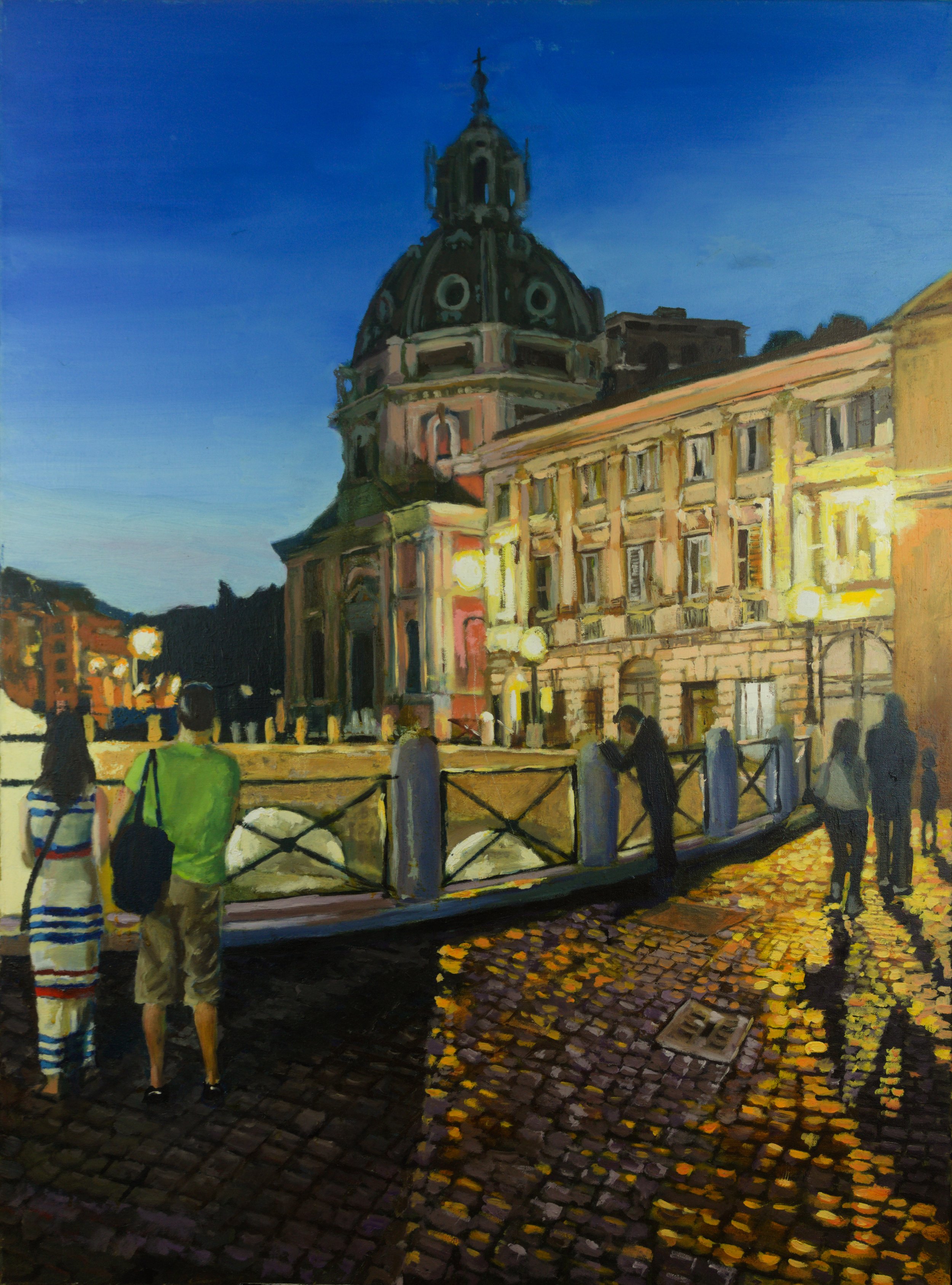
The couple in the foreground are suddenly awe-struck by a sight they had thought long familiar: the Chiesa del Santissimo Nome di Maria al Foro Traiano, the Baroque church that stands just a few dozen steps from its Renaissance sister, Santa Maria di Loreto, built two centuries earlier.
Rendezvous in Greenwich Village
Oil on canvas
24 x 18 in.
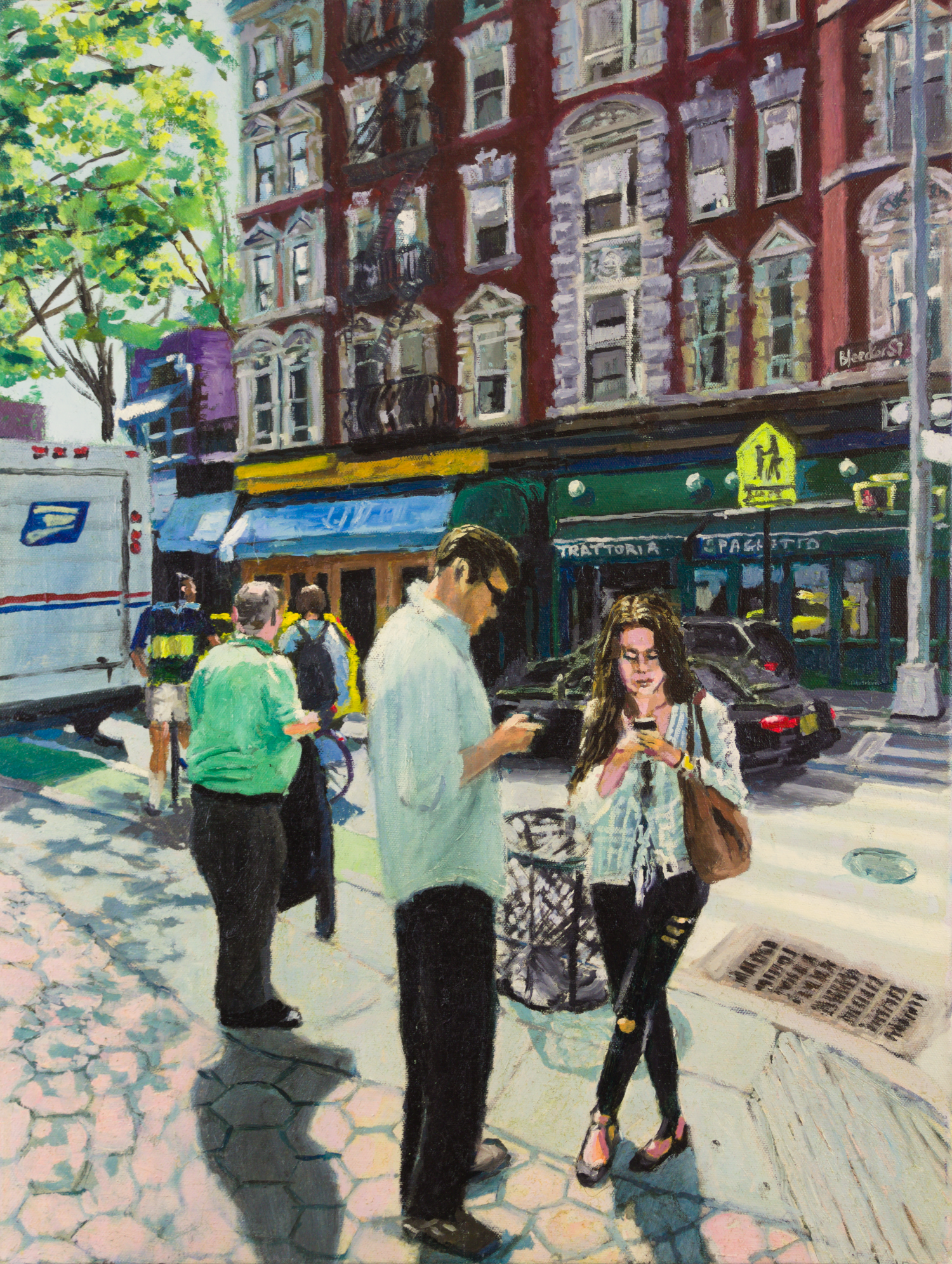
The bohemians are long gone, the rents are sky-high, but the celebrated neighborhood still retains its romantic aura - as do similar neighborhoods around the globe, such as Monti in Rome or the Latin Quarter in Paris.
O.Henry set his famous story, “The Last Leaf,” in this place, and Truman Capote and e.e. cummings lived here.
Because of its artistic reputation, it is often visited by tourists - and, occasionally, romantic couples looking forward to having a good time here. The couple in the painting are busy making some final calls before switching off their phones for the night.
Tea, Lemons, and Josephine
Oil on canvas
20 x 16 in.
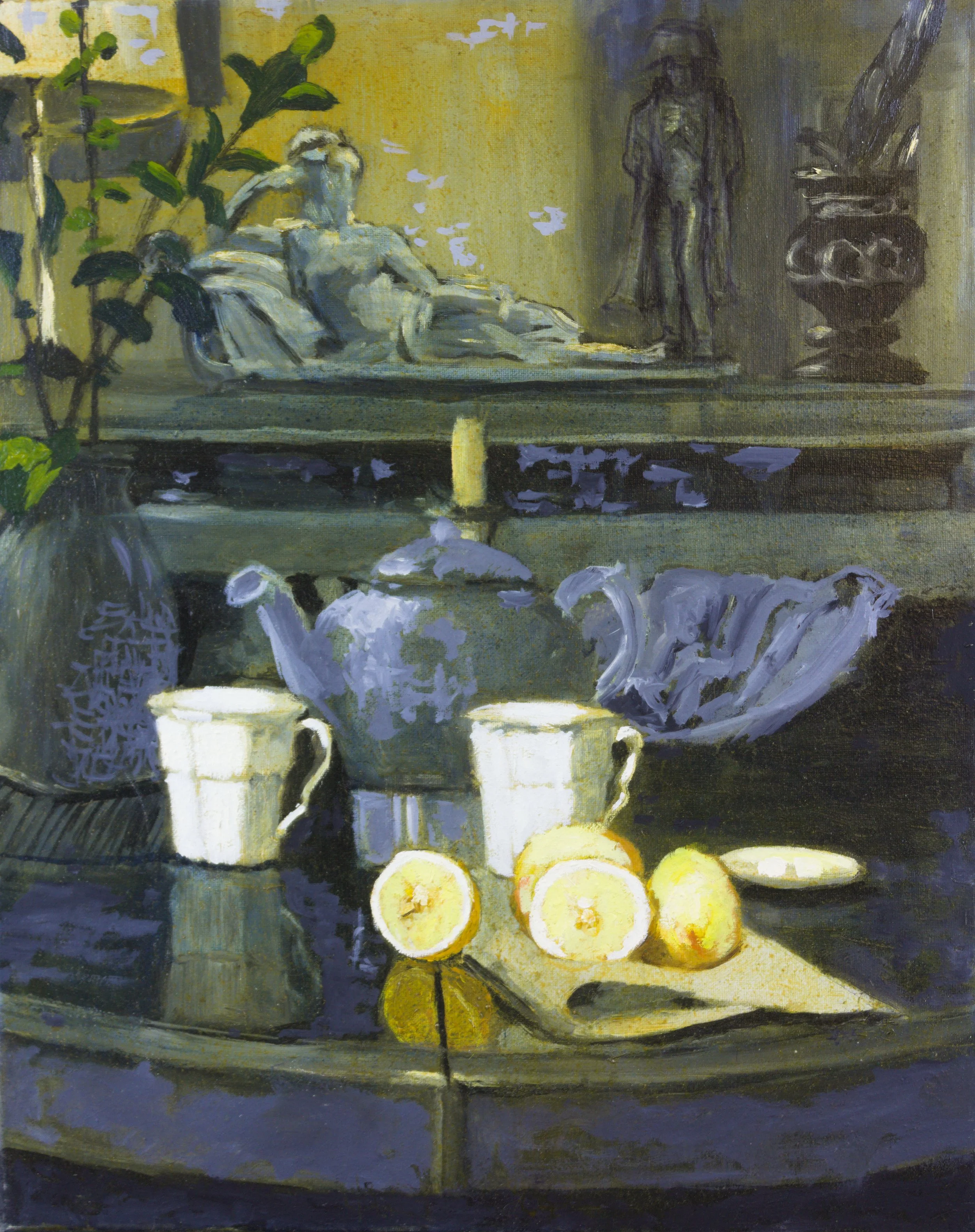
For a long time, certain families perceived it as a sign of good taste to have a Napoleon’s (and, occasionally, Josephine’s) figurine on their mantelpiece. Such families included, quaintly enough, representatives of states that were, during Napoleon’s lifetime, his direct and implacable enemies.
For this still life, I had to resort, in part, to the ancient method known as verdaccio: an Italian term for the mixture of black, white, and yellow pigments resulting in a grayish or yellowish (depending on the proportion) soft greenish brown. Back in the day, it was used for frescos, as well as for underpaintings, but I figured, hey, it’s solid and time-proven enough to have value on its own. Verdaccio stops short of being fully monochromatic, which is a different method, known as grisaille, which is a lot more reserved, in my opinion.
Rendezvous at the Pantheon
Oil on canvas
20 x 24 in.
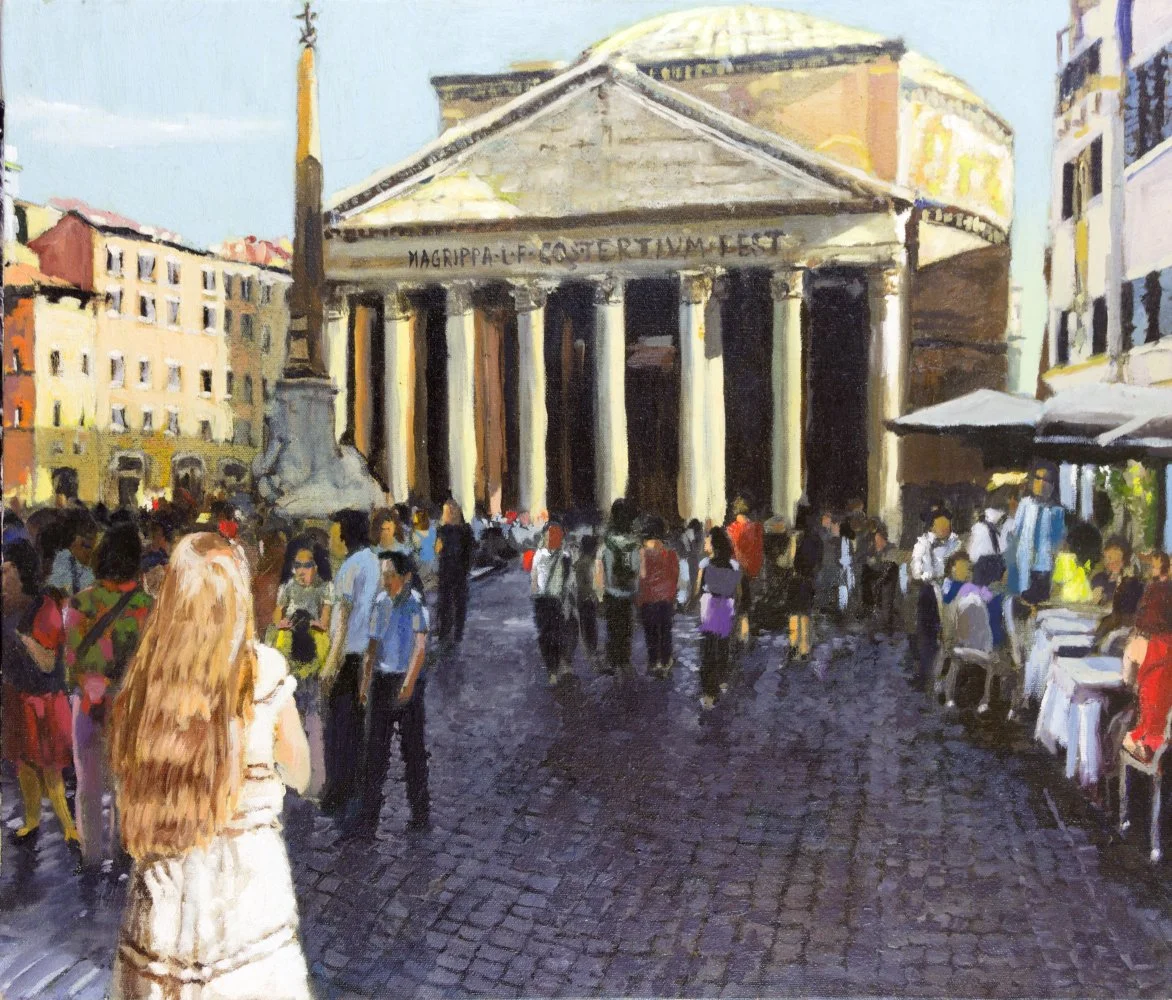
This celebrated structure was designed, engineered, and built by Emperor Hadrian, the only ruler in history (to the best of my knowledge) who was also a professional architect, and who continued to practice his craft throughout his life. He had a soft spot for domes. The one crowning the Pantheon remains the largest in the world made of unreinforced concrete: larger than St. Peter’s, and dwarfing those of St. Paul’s in London, the U.S. Capitol in Washington, and St. Isaac’s in St. Petersburg.
The woman in the foreground came here to meet her date; they had agreed to rendezvous at the fountain. But when she arrived, she couldn’t resist stepping back to take in Hadrian’s masterpiece in all its glory.
Visiting City Hall Park at Night
Oil on canvas
30 x 40 in.

Downtown Manhattan is hardly lively after dusk. If nightlife is your passion, you’d be better off heading north, to SoHo, Greenwich Village, Chelsea, or the Upper East Side. The park in front of City Hall, with the Manhattan Municipal Building in full view, is quiet and mysterious, haunted by its long and eventful history.
New York City Hall, hidden behind the trees, is the oldest city hall in the Republic, completed in 1812, when this area was still considered the “northern part” of the city. Over the years, it has been renovated many times, resulting in its architecture being a blend of French Renaissance, English Neoclassical, and American Georgian styles.
It is said that in 1783, American forces recaptured the civic center, and George Washington himself raised the flag here. Six years earlier, he had read the Declaration of Independence to troops and citizens nearby; and six years later, he was inaugurated as the first president of the United States, just a few blocks away. Afterward, he went to pray at St. Paul’s Chapel, now the oldest surviving church in Manhattan, just across from the park.
Place Maubert
Acrylic paint on canvas
20 x 16 in.
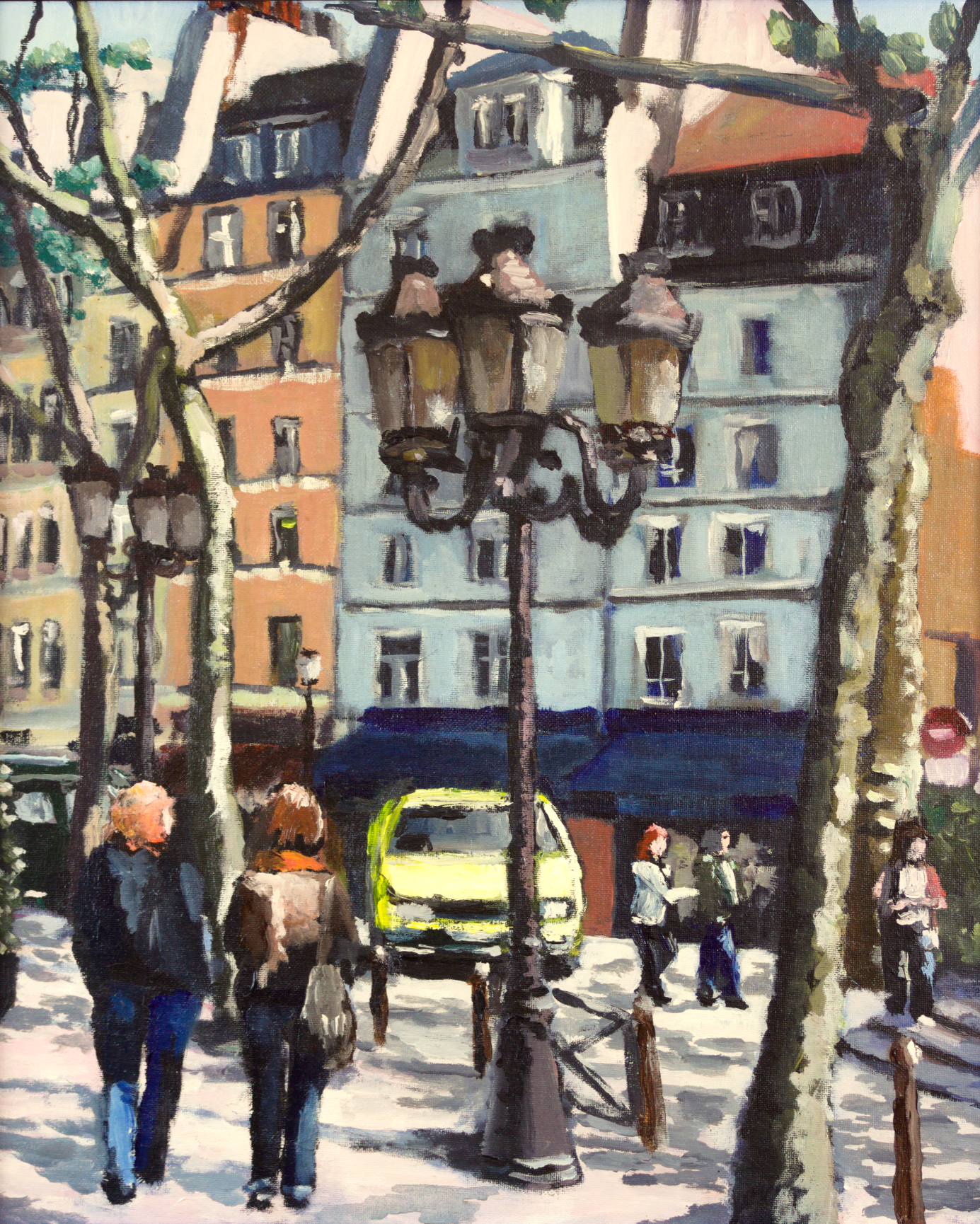
Place Maubert is one of those places in the heart of Paris that is often overlooked by guides - and tourists. It's cozy, quaint, and very much alive. Has its own metro station, too.
French Breakfast in Brooklyn
Oil on canvas
30 x 40 in.
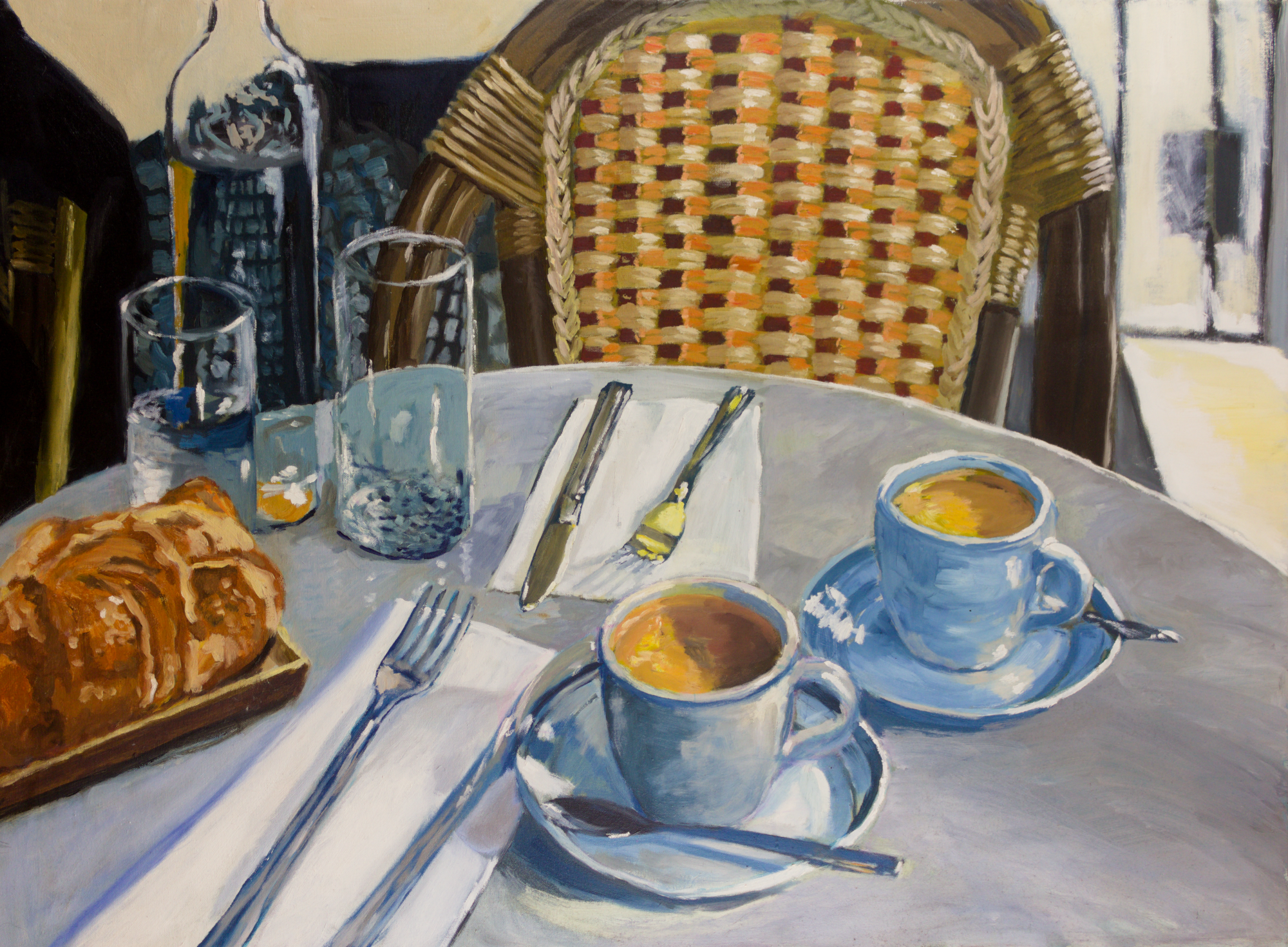
There is a lot more to this second most colorful New York City borough than meets the eye, where each neighborhood has its own stories to tell.
This little place is one of a dozen or so featuring that distinct French feel, and if you’re in the mood for a truly Parisian breakfast, you won’t be disappointed: you’ll sit in that café chair with the woven seat and back, resembling wicker but more streamlined, with that urban aesthetic; and have your perfect espresso with a fresh croissant, and perhaps enjoy some conversation with fellow connoisseurs.
Unlike my cityscapes, my still lives are usually smaller than this. I picked this size because the painting is more than just a still life. An ode to Brooklyn, perhaps.
A Private Rendezvous in Philadelphia, 1776
Oil on canvas
24 x 24 in.
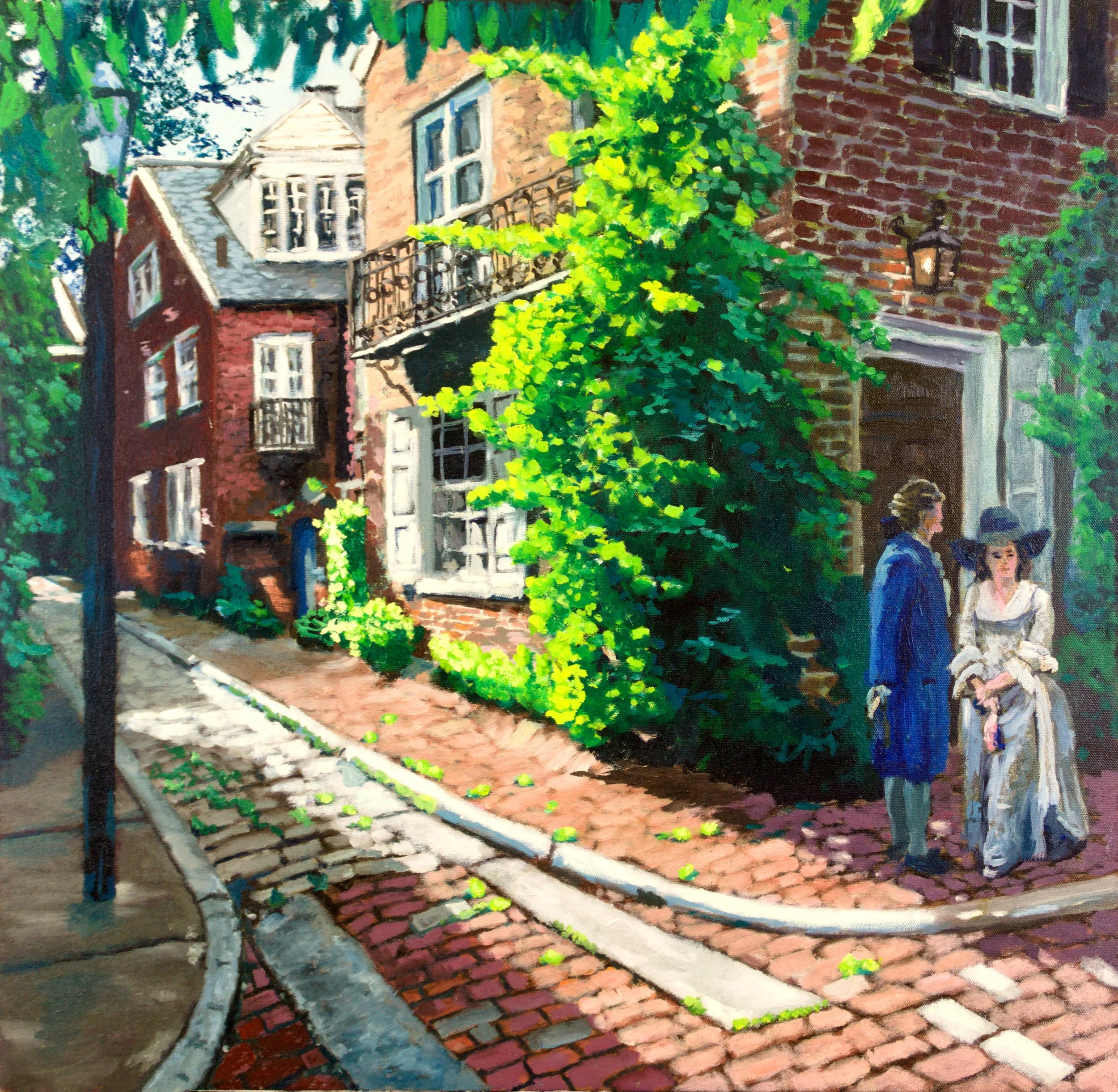
Just like in my other painting on this topic (Rendezvous in Philadelphia (in Public, 1776), the Revolutionary War is in full swing - but not here, in the residential neighborhood in the heart of the city. The couple are engaged in a tense discussion, attempting, one would imagine, to figure out where they stand with each other - while there’s still time: the man is likely to depart for the battlefield - soon.
The picturesque spot, which is now the corner of Irving and South Jessup, is well preserved to this day, and just as picturesque.
Rendezvous in Philadelphia, 1776
Oil on canvas
28 x 24 in.
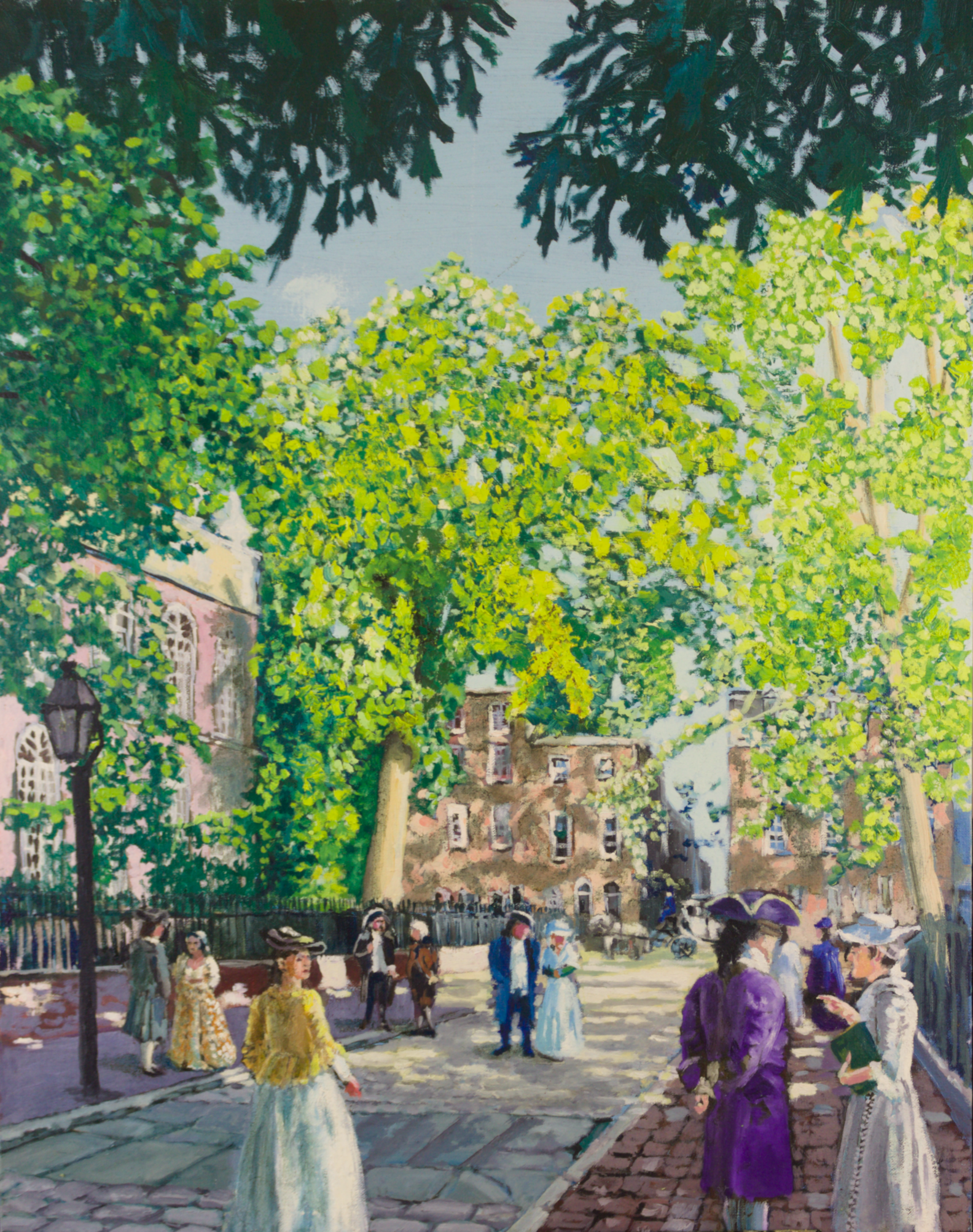
While the Revolutionary War rages, life goes on in Philadelphia on this sunny afternoon. Shops and taverns remain open, and people stroll along the streets. The couple in the foreground appear absorbed in a warm discussion: the poetry book in the woman’s hand hints at a romantic disposition, while the man’s upright, military posture suggests he may soon depart for the battlefield.
A lady to the left watches them curiously. Does she know them?
A portion of Christ Church is visible. Center city is a place where encounters with friends, relatives, or acquaintances are inevitable, suggesting that the couple no longer worries about who might see them together.
Poms
Oil on canvas
20 x 16 in.

A detailed still life composition features a cut pomegranate, a bunch of green grapes, a glass of amber liquid, and candlesticks against a dimly lit background. The arrangement highlights a play of light and shadow, emphasizing the textures and vibrant colors of the fruits.